

Martens on the Move at the Wales Biodiversity Partnership Conference 2025
Martens on the Move staff attended the Wales Biodiversity Partnership Conference held at Aberystwyth University earlier in the autumn.

The Wales Biodiversity Partnership Conference was organised by Wales Biodiversity Partnership (WBP), an organisation that ‘brings together key players from the public, private and voluntary sectors to promote and monitor biodiversity and ecosystem action in Wales’.
Lucy Nord, Martens on the Move Project Officer (Welsh/English border), joined a panel that included two other projects funded by the National Lottery Heritage Fund (Project SIARC and Natur am Byth!) at the conference’s session on Species Recovery. Lucy discussed how the project is supporting the recovery of pine martens across the Welsh counties of Monmouthshire, Powys, Carmarthenshire and Ceredigion.
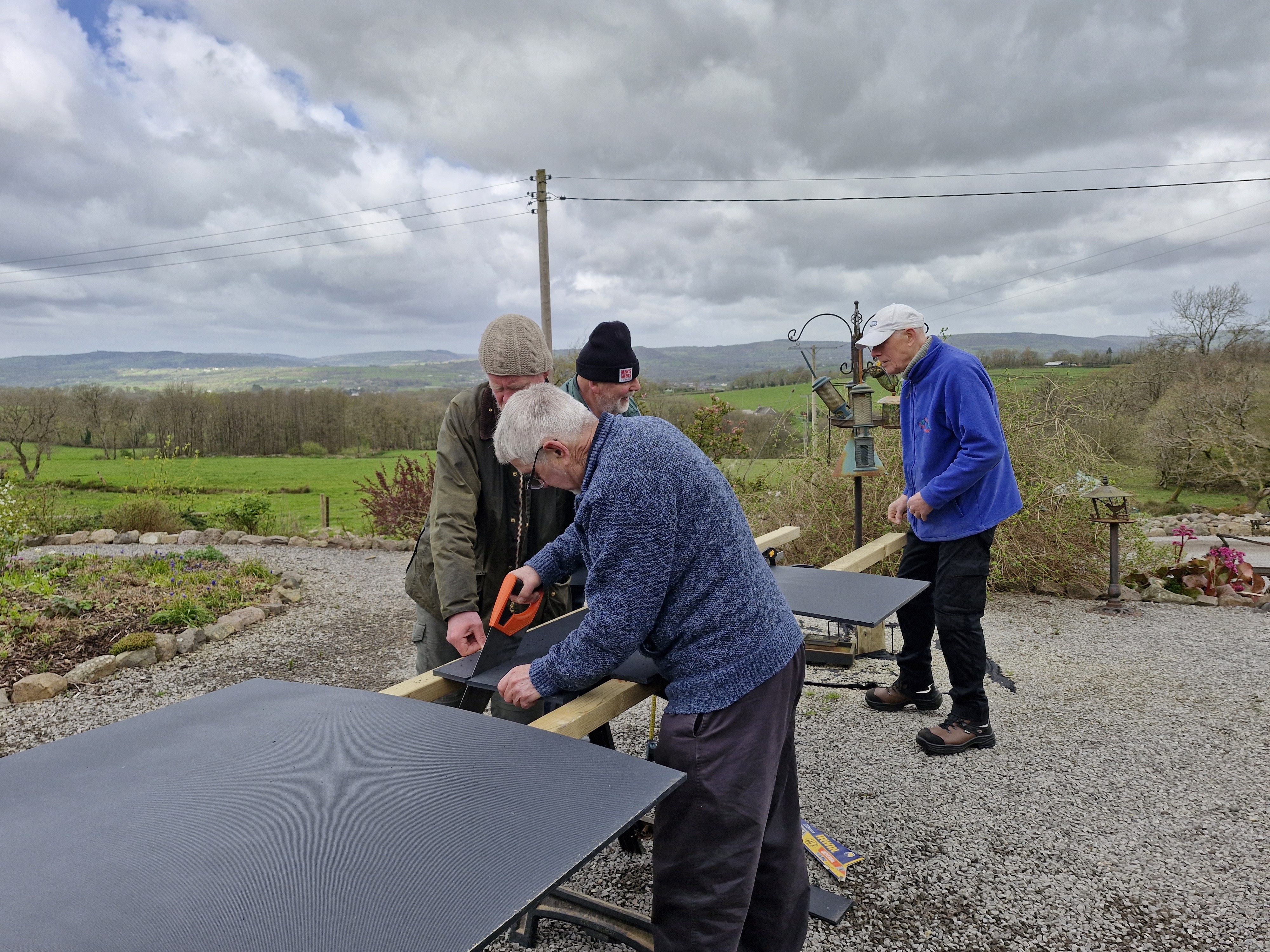
Martens on the Move works with community groups such as the Llangadog, Llandeilo and Llandovery Men's Shed, whose members built pine marten den boxes for the project. ©Rowie Burcham
Highlighting the importance of community engagement when working to restore Wales’s most threatened species was a theme echoed by all the speakers on the panel. Martens on the Move is working across targeted areas in Wales to:
- improve habitat for pine martens, such as installing artificial den boxes for overwintering and breeding;
- monitor pine martens at den boxes and feeders with trail cameras; and
- raise awareness of the species and the need for landscape-scale nature recovery.
Vincent Wildlife Trust (VWT)’s Martens on the Move project is a continuation of previous work the Trust has delivered for pine marten conservation. Pine martens could once be found across most of Wales, when large healthy woodlands covered the country. However, humans began clearing these forests around 6,000 years ago and since then many forest-dwelling animals, including the pine marten, have been affected by habitat loss. During the 19th and early 20th century, their numbers declined dramatically because of continued habitat loss and an increase in predator control associated with the growth in Victorian game-shooting estates.
The species is thought to have survived in very low numbers in parts of the Cambrian Mountains, Carmarthenshire and Snowdonia, but these remnant populations were under threat of extinction. Between 2015 and 2017, VWT successfully translocated 51 pine martens from northern Scotland to Mid Wales, and this population is successfully breeding each year and spreading out across landscapes.
Today, Martens on the Move is working in Wales with partner organisations, community groups and volunteers to continue pine marten conservation and help ensure that this native species thrive in Wales once again.