

The art of pine marten den box maintenance
Victoria Chanin, Martens on the Move Project Officer for the Scottish/English borders describes a day of pine marten den box maintenance in the Tweed Valley with a group of enthusiastic volunteers.

In the last week of November, I went out with some of my newly trained den box
installation team — ‘The Installeers’ — to carry out the first Martens on the Move den box
maintenance work in the Tweed Valley Hub. The weather forecast was uninspiring and
we feared we were in for a cold, wet week — however, the weather was kind and we had
some sunshine and very little rain. On one of the days we were treated to a crisp frozen
landscape with the remnants of autumn leaves clinging to the trees, creating a bright
blaze amid the quieter winter colours.
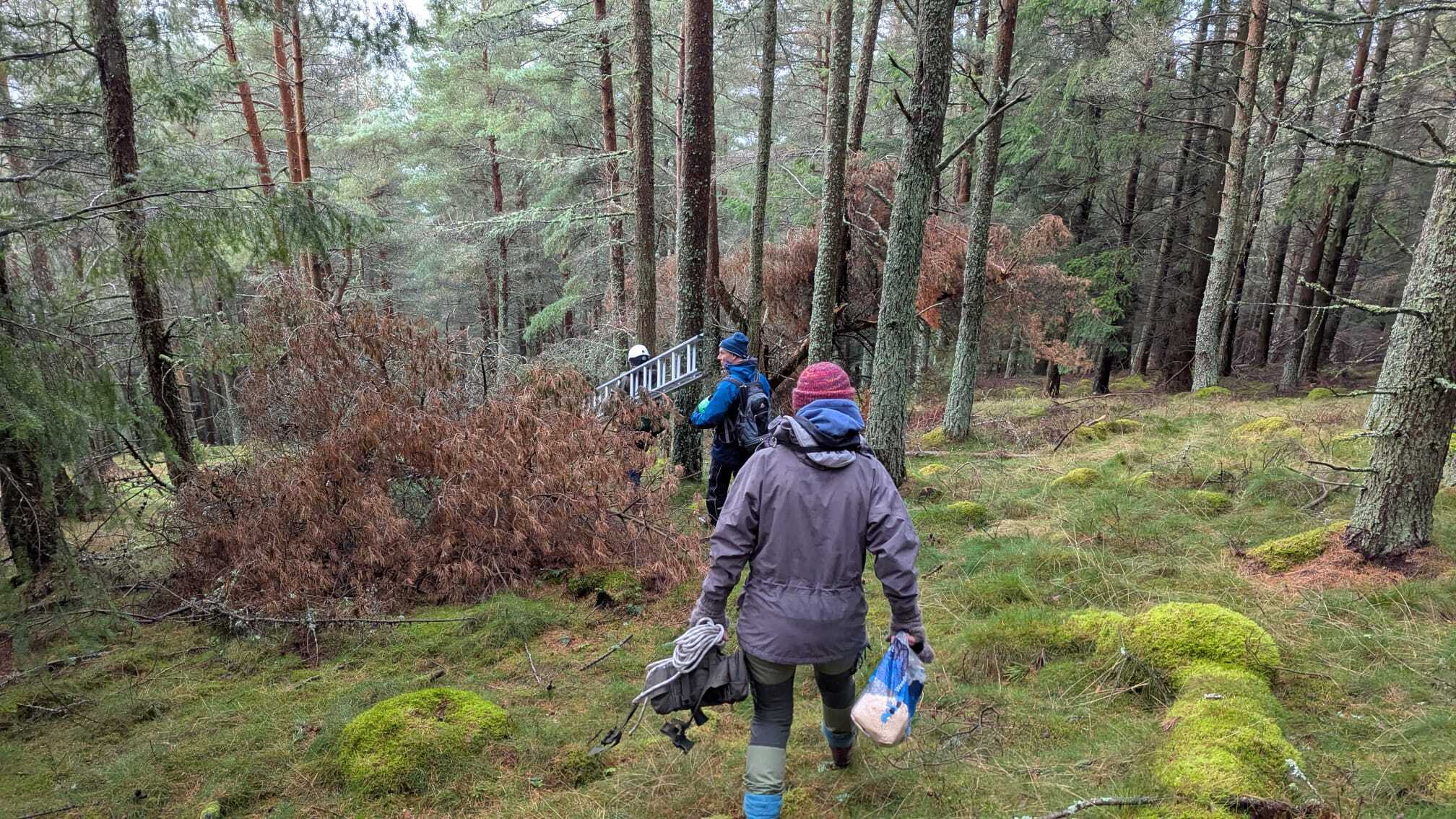
What is den box maintenance and why do we do it? Our den boxes are designed to
withstand the rigours of the British weather for several decades but regular
maintenance checks are important to ensure they remain safe and in good repair
throughout their lifetime. Although they are usually checked every three years, if we
know that a female has given birth and raised kits in a den box, it will be checked during
the autumn after the breeding season. This is because young kits don’t leave the box
until they are 7-8 weeks old and so will urinate in the bedding. There are often also
remains of prey and occasionally, sadly, a kit that hasn’t survived, so we clear out the den
box and refresh the cosy wood shavings ready for a new guest.
The checks take place in autumn, as this is the time of year when pine martens are least
likely to use den boxes. You can never guarantee that there won’t be a sleepy pine
marten having a snooze in a den box though, so a scout is sent ahead with a thermal
imager to see if there is a heat signature while the rest of the team hang back quietly,
waiting for the signal that it is safe to proceed.
Looking for signs
Before we get to the den box, we are already looking for signs of pine marten use, using binoculars to see if there are scats on the lid and when at the tree, looking for scratch marks on the branches below the den box and scats on the ground.
Checking the den box for wear and tear
Most of our den boxes are made with a Stokboard© (made from recycled farm plastics) front, back and lid, giving added weatherproofing to them. However, the battens at the back of the box that help to stabilise the den box against the tree trunk, are made of wood. We check that the battens aren’t starting to rot and make a note if they might need replacing in the next year or so.
Tree welfare
Many of our den boxes are secured to the tree with polypropylene rope. Over the years, trees grow, trunks expand and the rope will begin to cut into the trunk if not loosened off in time. It is not just a matter of simply loosening the knot, the den box needs to be secured on the pulley and rope system used for installation and slightly raised to take the weight of the box off the rope, making it loose enough to adjust — a tricky job with wet, algae-covered rope and cold fingers!

What’s in the box?
Finally, we lift the den box lid and peer inside. What we’re hoping to see is a nice, compacted circular depression in the wood shavings, a clear indication of pine marten inhabitation. Could anything else make a similar dent? Squirrels do sometimes take up residence in a nice cosy den box, but the minimalist interior is not their style, and they will bring in twigs, moss and leaves to give it a more ‘drey’ feel.
What did we find in the Tweed Valley?
My squawk of delight when I lifted the lid of the den box at Faldonside to find the remains of a grey squirrel (tail and one limb). It certainly didn’t get itself into the den box unaided and further exploration uncovered a hen’s eggshell, identified by the landowner as being salvaged from her compost heap. This den box got the full treatment, brought to the ground and emptied of its contents, fresh wood shavings replaced the maggoty ones, and the box was hauled back into place.
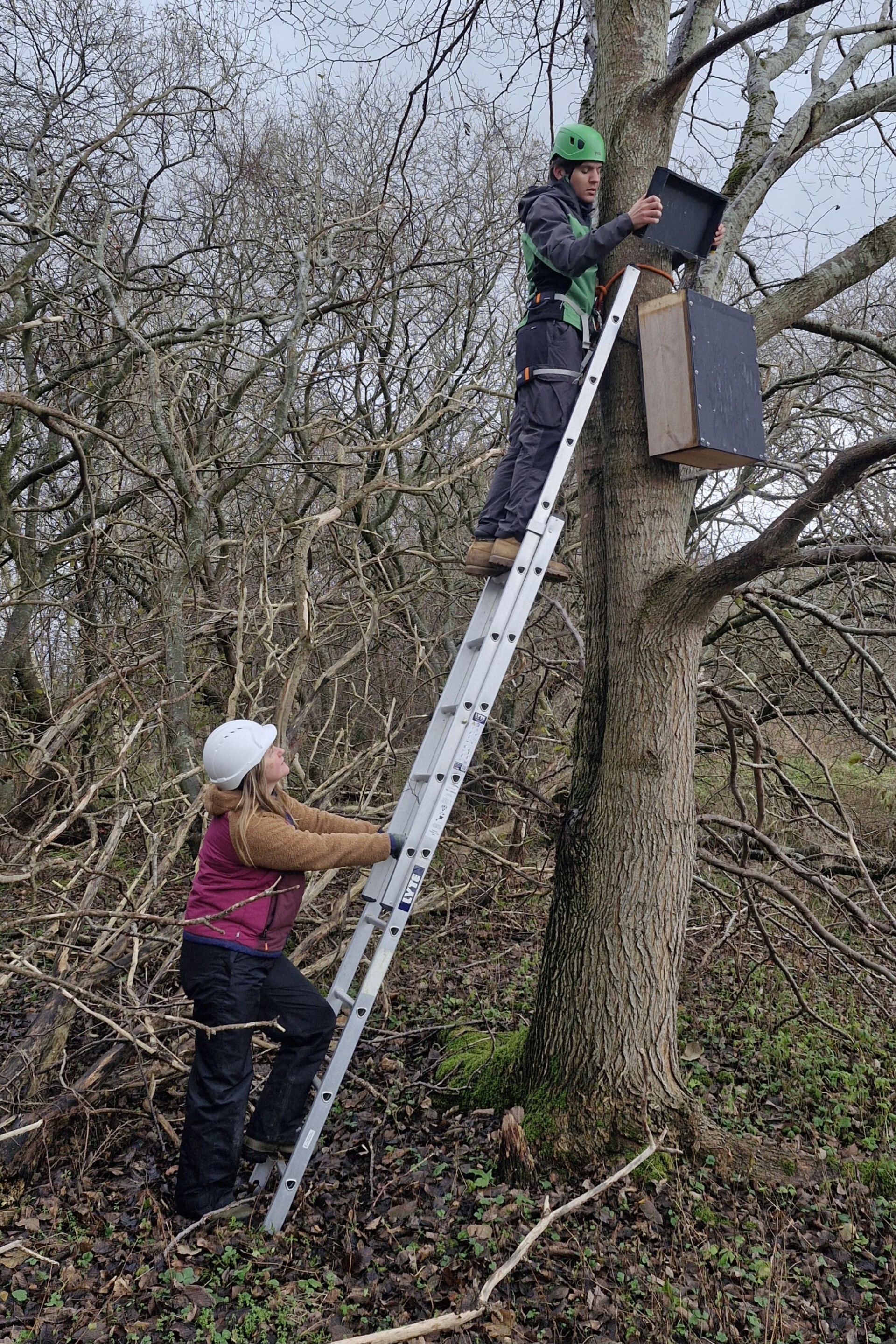
Two other den boxes showed nice pine marten-sized depressions and one had a small
scat on the lid, a little smaller than usual, but showing the signature curled arrangement
and faint evidence of a sweet musky scent.
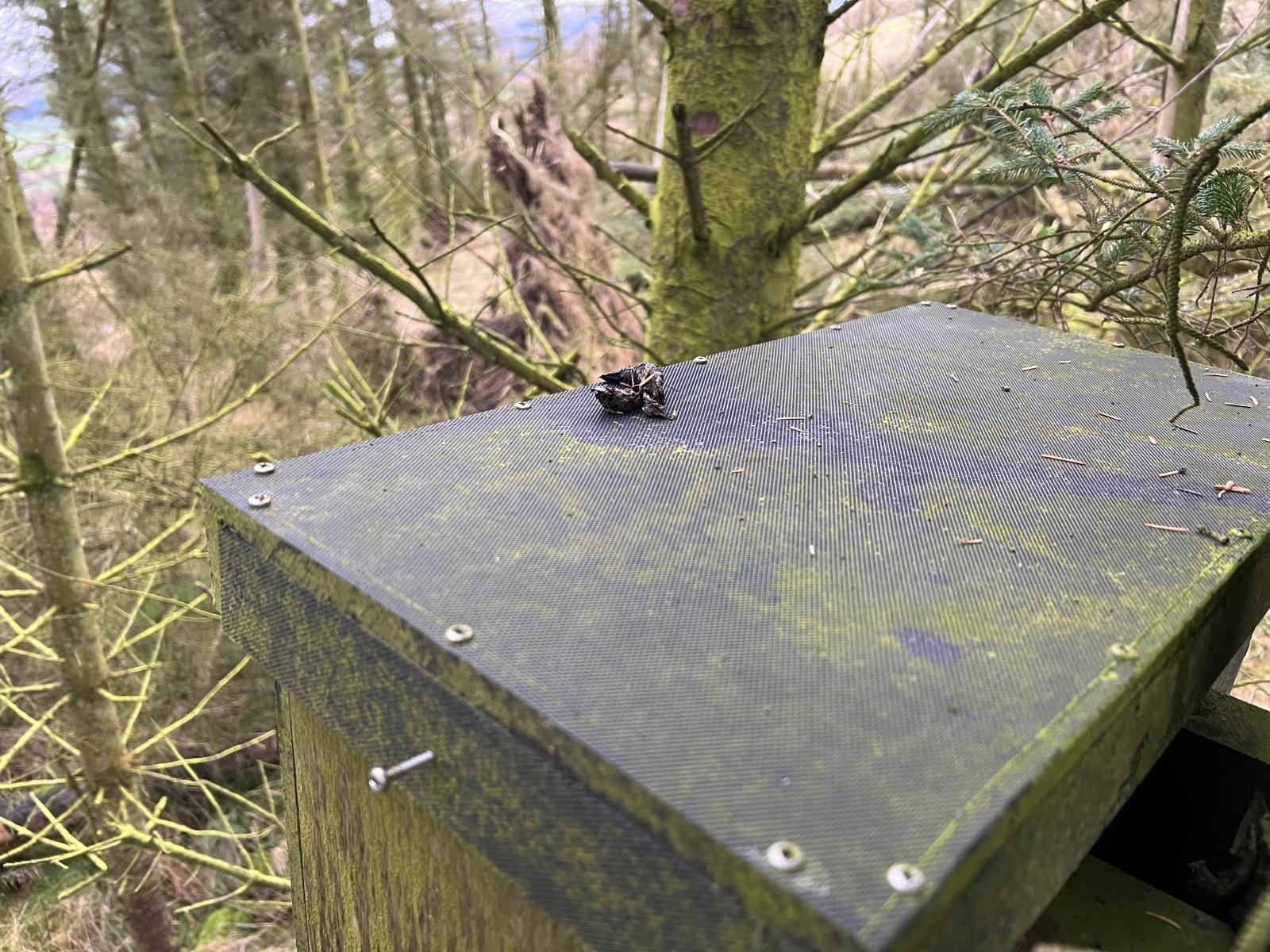
A small pine marten scat on the den box lid.
It is incredibly rewarding doing fieldwork with the volunteers. We’re out in some
breathtaking woodland landscapes, fuelled by enthusiasm and fresh air — and if we
find multiple pine marten scats with varied dietary contents, the joy is shared equally
among us. I have been amazed by the range of expertise among the team and have been
shown exquisite slime moulds (really!) on pine cones that I would not have noticed, as
well as a plethora of extraordinary fungi. On top of all that, they make a phenomenal team,
working so well together that even the trickier den boxes are dealt with smoothly with a
collaborative approach to problem-solving.
Thank you!
I would like to thank every one of the volunteers I worked with this year who are all
amazing and fantastic to work with — and I’m looking forward to getting back out with
them all next year.
Elaine Rainey, of the Tweed Valley hub den box installation team writes...
Following on from the thoroughly enjoyable den box installation training a few weeks
previous, I was excited to get out to see some of the more established den boxes in the
region as part of the maintenance week. The experience did not disappoint, as on my
very first maintenance check I was treated to some fresh pine marten scats on top of the
den box and a noticeable pine marten-sized depression in the sawdust in the den box!

Using a thermal imaging camera to check there are no pine martens in the den box before approaching the box. ©Elaine Rainey
All the volunteers got to have a go at all the procedures required as part of a den
box maintenance trip and I was delighted to be given the opportunity (my first time ever!)
to use the thermal scope to check for pine marten heat signatures before we proceeded
with the maintenance. It was quite exhilarating quietly approaching the den box with the
thermal scope — one eye on the undergrowth and one eye on the den box! I went home absolutely buzzing and I can't wait to do more — both with the newly erected boxes and
with these more established ones.
Victoria Chanin Martens on the Move Project Officer for the Scottish/English borders